
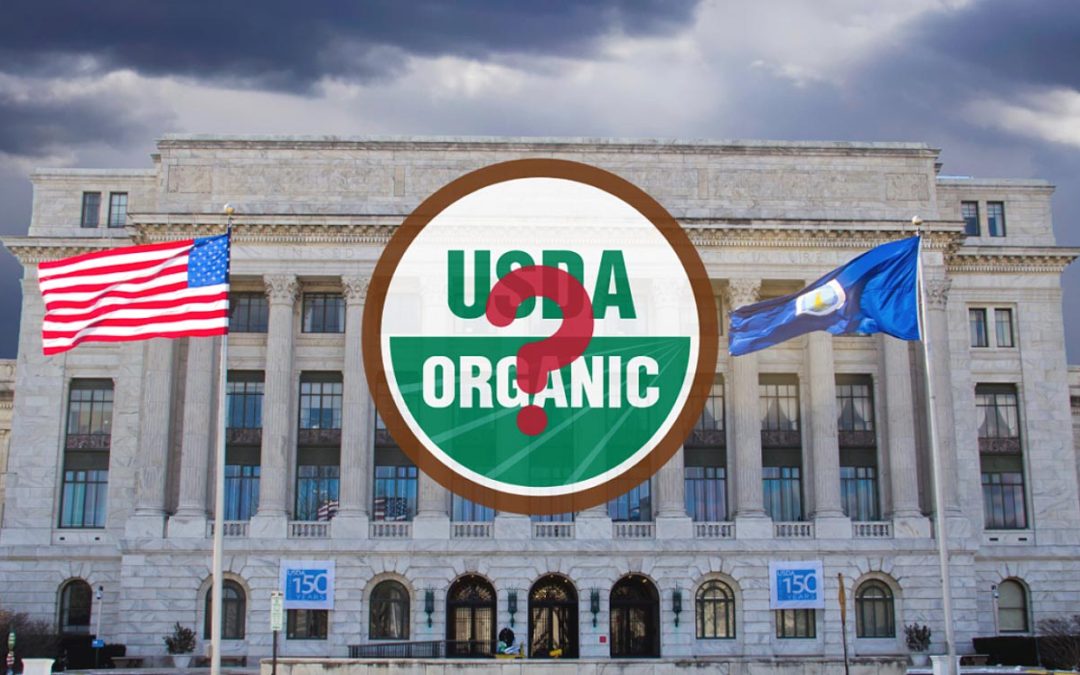
LA FARGE, WIS. — In 1990, Congress charged the USDA with protecting the interests of organic stakeholders, farmers, consumers, and businesses when it passed the Organic Foods Production Act (OFPA). Unlike many laws, where Congress leaves it up to the administration to fill in all the blanks in developing regulatory structures, OFPA mandated specific provisions protecting the organic food and farming movement from being corrupted by corporate interests. But, according to industry watchdog OrganicEye, those provisions are now being flagrantly violated.
After gutting the already understaffed National Organic Program — responsible for the oversight of a $70 billion US industry that depends on global supply chains — by a reported 30%, USDA Secretary Brooke Rollins has now failed to appoint, in a timely manner, five members to fill vacancies on the 15 member National Organic Standards Board (NOSB), the expert panel Congress created as a buffer against industry corruption.
Every year, the USDA announces openings on the board in the Federal Register, accepts nominations, and subsequently evaluates candidates. Historically, those appointments are made public in January to allow the new NOSB members sufficient time before the spring meeting to go through an orientation process and begin their work on the subcommittees charged with evaluating materials and processes to ensure they comply with the spirit and letter of the organic law.
“The board is currently operating with the critical workload spread over a third fewer members. And even if our press release serves as a wake-up call for USDA leadership and they spring into action and announce the pending appointments, these folks will be voting at the upcoming NOSB meeting without having participated in the important review of research and debates that take place within the subcommittees,” said Mark A. Kastel, Executive Director of OrganicEye.
The spring NOSB meeting is scheduled for May 12-14, 2026, in Omaha, Nebraska.
OrganicEye contends that meeting without the full complement of board members would be a violation of federal law and could invalidate any business that is transacted.
“Not only did Congress specify that the board be populated by 15 knowledgeable members in the organic industry, but they earmarked certain seats so that the interests of diverse stakeholders would be represented,” Kastel added.
As stated on the USDA’s website, OFPA specifies that the board be comprised of 15 volunteers from across the organic community: four organic farmers/growers, three environmental/resource conservationists, three consumer/public interest representatives, two organic handlers/processors, one retailer, one scientist (toxicology, ecology or biochemistry), and one USDA accredited certifying agent. The 5-year terms of service are staggered among the members, beginning in January of any given year.
Current vacancies include two organic producer positions, two consumer/public interest representative positions (widely viewed as the organic movement’s most important constituencies), and a USDA-accredited certifying agent position.
Federal law mandates that the human health and environmental impact of any synthetic or non-organic substance be reviewed by the NOSB before it can be authorized for use. OFPA also mandates the USDA Secretary to seek the counsel of the diverse, independent board for advice in implementing the Act.
OrganicEye has a keen interest in a number of items on the upcoming NOSB meeting agenda. They include the reauthorization of the use of carrageenan, a seaweed derivative which is classified as a potential carcinogen and which the group has been fighting to remove from the list of approved non-organic substances, and their own proposal to require the same disclosure of certifiers on e-commerce sites as is currently required by law to appear on package labels.
“It’s really unfortunate that USDA leadership has painted the organic community into a corner with their delays,” Kastel lamented. “Whether they postpone the meeting or rush appointments of people who have not spent the last four months going through orientation and getting up to speed at subcommittee meetings, obtaining a working knowledge of the issues they will be voting on, there are really no good options here.”
-30-